

Licensed Physical Therapist · PPTA-P 14336 · Aesthetic Physio Care, DHA Lahore · November 2, 2026
Quick answer: Sciatica is pain, tingling or numbness that travels from the lower back or buttock down the leg because the sciatic nerve is irritated, most often by a bulging disc. Many cases improve with time and the right movement. Physiotherapy helps by easing nerve irritation, restoring movement and strength, and teaching you safe positions and exercises for daily life.
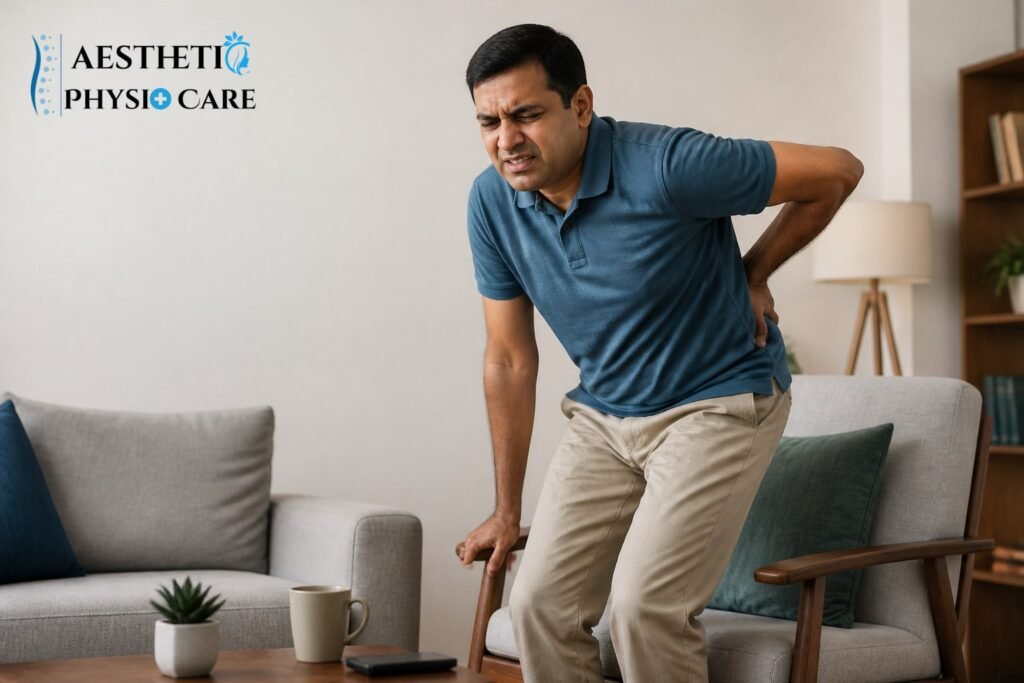
What is sciatica?
The sciatic nerve is the longest nerve in the body. It starts from nerve roots in the lower back, runs through the buttock and travels down the back of each leg to the foot. “Sciatica” is not a diagnosis on its own. It is a description of symptoms that happen when this nerve, or the roots that form it, become irritated or compressed.
What are the symptoms of sciatica?
Sciatica usually affects one side. Symptoms can be mild and annoying or severe enough to stop you sitting, walking or sleeping. Common signs include:
- Pain that runs from the lower back or buttock into the thigh, calf or foot
- A burning, shooting or electric-shock feeling down the leg
- Tingling, pins and needles or numbness in the leg or foot
- Leg pain that is often worse than the back pain
- Pain that gets worse when you sit for long, cough, sneeze or bend forward
- Weakness in the leg or foot in some cases
What causes sciatica?
Several conditions can irritate the sciatic nerve:
- Herniated or bulging disc: the most common cause, where disc material presses on or inflames a nerve root
- Spinal stenosis: narrowing of the spaces in the spine, more common with age
- Spondylolisthesis: one vertebra slipping slightly forward over another
- Piriformis-related pain: a tight buttock muscle irritating the nerve as it passes nearby
- Pregnancy: changes in posture and pressure can trigger sciatic-type pain
Risk rises with long hours of sitting, heavy or repeated lifting, low activity levels and previous back problems. Your physiotherapist will look for the likely source, because treatment differs depending on the cause.
When to see a doctor urgently
Some symptoms may mean a nerve is badly compressed and need emergency care. Seek help immediately if you notice:
- Numbness or tingling around the genitals, buttocks or inner thighs
- Loss of bladder or bowel control, or difficulty passing urine
- Sciatica in both legs at the same time
- Severe or worsening weakness in a leg, or foot drop where the toes catch the ground
- Sciatica after a major fall or accident, or with fever or unexplained weight loss
These signs are rare, but they need same-day medical assessment, not physiotherapy at home.
How does physiotherapy help sciatica?
Physiotherapy aims to calm the irritated nerve, keep you moving and build the strength and control that protect your back. At Aesthetic Physio Care, treatment is guided by Dr. Hadia Ishfaq, PT (DPT), whose hospital experience includes the Orthopedic and Spine OPD at Lahore General Hospital. A typical plan may include:
Assessment and explanation
We test movement, strength, reflexes and nerve sensitivity to understand what is driving your symptoms. Understanding your pain reduces fear and helps you move with confidence.
Pain-relieving positions and movements
Many people find certain positions or repeated movements ease leg pain. We help you find yours and avoid those that aggravate the nerve.
Manual therapy and soft-tissue work
Gentle hands-on techniques can reduce stiffness in the lower back and tension in the hip and buttock muscles.
Nerve mobility exercises
Specific, gentle movements help the nerve glide more freely. These are dosed carefully so they do not flare symptoms.
Strength and core control
As pain settles, we build strength in the trunk, hips and legs, so your spine is better supported for work, prayer, sport and lifting.
Daily habits and ergonomics
We look at how you sit, drive, sleep and lift. Small changes can make a big difference. Our posture correction and ergonomics service covers this in detail.
How long does sciatica take to get better?
Recovery time varies a lot between people. The NHS notes that many back and sciatica problems improve within weeks, while some last longer. Factors such as the cause, how long symptoms have been present, your general health and how active you can stay all play a part. Your physiotherapist will review progress regularly and refer you for medical review if symptoms are not improving as expected.
What can you do at home for sciatica?
| Helpful | Best avoided for now |
|---|---|
| Short, regular walks | Long periods of bed rest |
| Changing position every 30 to 45 minutes | Sitting for hours on a soft sofa |
| Heat on the lower back or buttock | Heavy lifting and twisting |
| Sleeping on your side with a pillow between the knees | Forcing deep stretches that increase leg pain |
| Gentle exercises your physiotherapist has shown you | Random exercises from videos without assessment |
Ask a pharmacist or doctor about pain relief that is safe for you, especially if you take other medicines or are pregnant.
Can I get help for sciatica online?
If you cannot travel to DHA, an online physiotherapy consultation can help you understand your symptoms and begin safe exercises. Online advice does not replace an in-person examination, particularly when nerve symptoms are present, so we will tell you if you need to be seen face to face. Learn more on our back and neck pain physiotherapy page.
Book a consultation
If leg pain, tingling or numbness is affecting your life, book an assessment at Aesthetic Physio Care, DHA. We are open Monday to Saturday, 9am to 10pm. Message us on WhatsApp +92 339 0001855, call +92 323 4551855 or email hadia@aestheticphysiocare.com.
Frequently asked questions
Is walking good for sciatica?
Gentle walking is usually helpful because it keeps the spine moving and improves blood flow without heavy strain. Start with short, comfortable walks and build up gradually. If walking clearly increases leg pain or numbness, stop and get assessed.
Can sciatica go away on its own?
Many cases improve over time, especially with gentle activity and good habits. However, pain that lasts, keeps returning or comes with weakness should be assessed. A physiotherapist can speed up your understanding of what helps and what to avoid.
What is the best sleeping position for sciatica?
Many people find side-lying with a pillow between the knees most comfortable. Others prefer lying on their back with a pillow under the knees. Choose the position that eases your leg pain and avoid sleeping on a very soft, sagging mattress.
When is sciatica an emergency?
Seek urgent medical care if you have numbness around the genitals or buttocks, bladder or bowel changes, symptoms in both legs, or rapidly worsening leg weakness. These can be signs of serious nerve compression and need same-day assessment.
Talk to Dr. Hadia about your situation
In-clinic in DHA Lahore or online on Zoom / Google Meet for Pakistan and the USA. Mon–Sat, 9am–10pm (PKT).