

Licensed Physical Therapist · PPTA-P 14336 · Aesthetic Physio Care, DHA Lahore · November 2, 2026
Quick answer: Melasma in brown skin is best managed, not “cured overnight.” What works is strict daily sun protection, gentle prescription-guided topical care, and carefully chosen in-clinic treatments such as mild chemical peels. Harsh bleaching creams, aggressive lasers and unsupervised steroid creams can make it worse. Expect gradual improvement and a long-term maintenance plan.
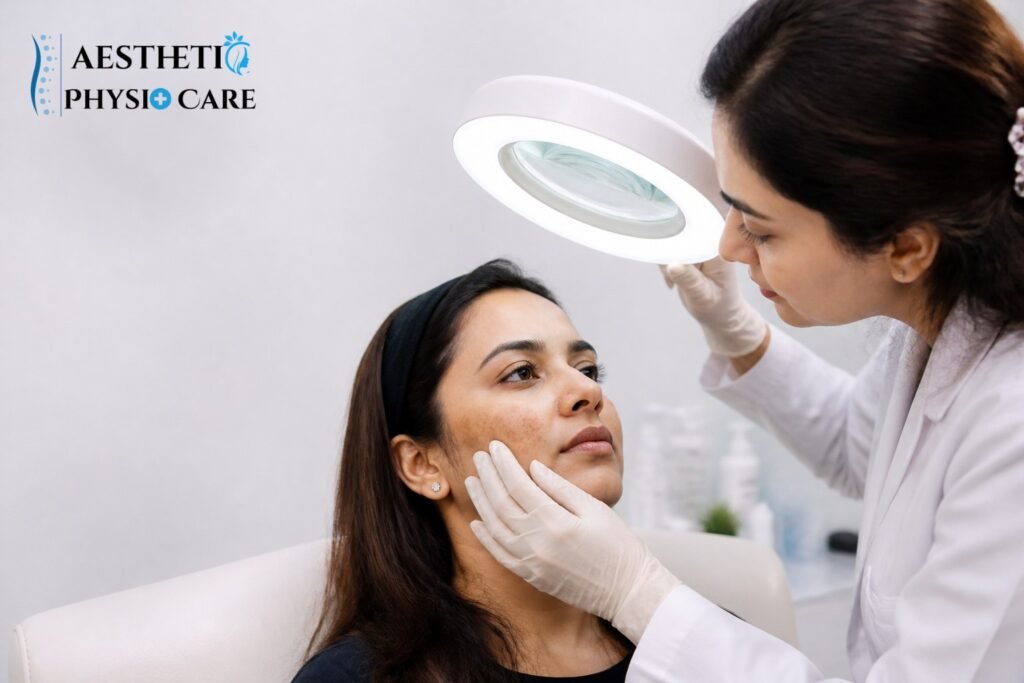
What is melasma?
Melasma is a common skin condition that causes brown or greyish-brown patches, usually on the cheeks, forehead, upper lip, nose and chin. The patches are often symmetrical, appearing on both sides of the face. It is not infectious and not harmful to your health, but it can affect confidence, especially when it is visible in photos or under bright light.
Why is melasma so common in brown skin?
Brown skin has active pigment cells (melanocytes) that respond strongly to triggers. That is protective in many ways, but it also means the skin can overproduce pigment in certain areas. In Pakistan, several triggers often combine:
- Strong sun: UV light and visible light both stimulate pigment, and Lahore’s summers are long and intense
- Heat: working near a stove, in hot cars or outdoors can worsen melasma, even without direct sun
- Hormones: pregnancy, hormonal contraceptives and other hormonal changes are well-known triggers
- Genetics: melasma often runs in families
- Irritation: harsh scrubs, home remedies and strong whitening products can inflame skin and deepen pigment
What actually works for melasma?
1. Daily sun protection, every single day
This is the foundation and nothing else works well without it. Use a broad-spectrum sunscreen of SPF 30 or higher each morning, and reapply when you are outdoors. Tinted sunscreens containing iron oxides can also help protect against visible light, which matters for brown skin. Add a wide-brimmed hat, shade and a dupatta or scarf where practical.
2. Gentle, guided topical treatment
Certain topical ingredients can help reduce pigment over time. A clinician will choose what is suitable for you based on your skin, any pregnancy or breastfeeding, and how sensitive your skin is. Strong prescription creams should only be used under medical supervision and for the time recommended.
3. Carefully chosen in-clinic treatments
For many people with brown skin, mild, well-controlled chemical peels are a useful addition to home care. Other options, such as some medical facials or gentle resurfacing, may be considered after assessment. The key word is gentle: the aim is to lift pigment without causing inflammation that can trigger more pigment.
4. Patience and maintenance
Melasma tends to fade slowly and can return with sun, heat or hormonal changes. A good plan includes a maintenance routine, not just a short treatment course.
What makes melasma worse?
| Common mistake | Why it backfires | Better option |
|---|---|---|
| Unregulated whitening or “formula” creams | May contain steroids or harmful ingredients that thin or damage skin | Use clinician-guided products only |
| Skipping sunscreen indoors or on cloudy days | Daylight through windows and visible light still affect pigment | Apply sunscreen every morning |
| Aggressive lasers or deep peels | Can cause rebound darkening in brown skin | Choose gentle, assessed treatments |
| Lemon, toothpaste or harsh scrubs | Irritation leads to more pigment | Keep skin calm with a simple routine |
| Stopping care once patches fade | Melasma often returns | Follow a maintenance plan |
The NHS guidance on skin lightening warns about products containing harmful ingredients sold without proper regulation. If a cream promises instant results, be cautious.
Is it melasma or another type of pigmentation?
Not every dark patch is melasma. Post-inflammatory hyperpigmentation after acne, sun spots, freckles and some medical conditions can look similar but need different treatment. A skin assessment helps identify the type of pigmentation and its depth before any treatment begins. If marks are linked to past breakouts, our acne and acne scar treatment page may also be relevant.
Is melasma treatment safe during pregnancy?
Melasma is common during pregnancy and sometimes fades afterwards. Many active ingredients and in-clinic treatments are avoided during pregnancy and breastfeeding. During this time, sun protection and a gentle routine are usually the focus. Always tell your practitioner if you are pregnant, trying to conceive or breastfeeding.
How long does melasma treatment take?
There is no fixed timeline. Improvement is usually gradual over months rather than weeks, and depends on the depth of the pigment, your triggers and how consistently you protect your skin. We review progress at follow-up visits and adjust the plan. Honest expectations matter: melasma can be improved and controlled, but it can return, so long-term care is part of the plan.
When should you see a doctor?
See a doctor promptly if a dark spot is changing in shape, size or colour, bleeds, itches, or looks different from your other marks. These need medical evaluation, not cosmetic treatment.
How we approach melasma at Aesthetic Physio Care
Every plan starts with a skin assessment, a review of your triggers and lifestyle, and a clear explanation of realistic goals. We then build a step-by-step plan that combines sun protection, home care and, where suitable, gentle in-clinic treatments, with medical procedures carried out only by qualified, licensed practitioners. See our pigmentation and melasma treatment page for more detail.
Book a consultation
If dark patches are affecting your confidence, book a skin assessment at Aesthetic Physio Care in DHA, Lahore. We are open Monday to Saturday, 9am to 10pm. Message us on WhatsApp +92 339 0001855, call +92 323 4551855 or email hadia@aestheticphysiocare.com. You can also contact us to ask about an online skin consultation.
Frequently asked questions
Can melasma be cured permanently?
Melasma can usually be improved and controlled, but it can return with sun, heat or hormonal changes. That is why a good plan includes daily sun protection and a maintenance routine, rather than a single short course of treatment.
Which sunscreen is best for melasma on brown skin?
Choose a broad-spectrum sunscreen of SPF 30 or higher and apply it every morning, reapplying when outdoors. Tinted sunscreens with iron oxides also help protect against visible light, which can be especially useful for melasma in brown skin.
Is laser good for melasma in Pakistani skin?
Some lasers can cause rebound darkening in brown skin if they are not carefully chosen. Gentle, assessed options such as mild chemical peels are often considered first. Any device-based treatment should follow a proper assessment by a qualified practitioner.
Are whitening creams safe for melasma?
Many unregulated whitening or formula creams contain steroids or other harmful ingredients that can damage the skin. Avoid products that promise instant results. Use only clinician-guided treatments, for the time recommended, and stop if your skin becomes irritated.
Talk to Dr. Hadia about your situation
In-clinic in DHA Lahore or online on Zoom / Google Meet for Pakistan and the USA. Mon–Sat, 9am–10pm (PKT).