

Licensed Physical Therapist · PPTA-P 14336 · Aesthetic Physio Care, DHA Lahore · November 5, 2026
Quick answer: Frozen shoulder (adhesive capsulitis) causes pain and gradual stiffness as the shoulder capsule thickens and tightens. It usually passes through three stages: freezing (painful), frozen (stiff) and thawing (recovering). Recovery is often slow and can take many months or longer. Physiotherapy helps manage pain, keep the shoulder moving and gradually restore movement and strength.
What is frozen shoulder?
Frozen shoulder, also called adhesive capsulitis, happens when the flexible tissue around the shoulder joint, known as the capsule, becomes inflamed, thickened and tight. This limits how far the shoulder can move in every direction, both when you move it yourself and when someone else tries to move it for you.
The NHS Wales guide to frozen shoulder notes that it most often affects people between their 40s and 60s and is more common in women.
Who is more likely to get frozen shoulder?
- People with diabetes, which is common in Pakistan and is a well-recognised risk factor
- People with thyroid conditions
- Those who have had a period of keeping the shoulder still, such as after surgery, a fracture or a stroke
- People aged roughly 40 to 60
- Women more often than men
Often there is no clear trigger at all.
What are the three stages of frozen shoulder?
Frozen shoulder usually follows a pattern, although the length of each stage varies a lot from person to person and stages can overlap.
| Stage | What you may notice | Physiotherapy focus |
|---|---|---|
| 1. Freezing (painful) | Increasing pain, often worse at night; movement starts to reduce | Pain relief, gentle movement, sleep positions, activity advice |
| 2. Frozen (stiff) | Pain may ease, but stiffness is marked; reaching overhead or behind the back is hard | Gradual stretching and mobility, maintaining function |
| 3. Thawing (recovery) | Movement slowly returns | Progressive stretching, strengthening and return to normal tasks |
How long does frozen shoulder take to recover?
Frozen shoulder is known for being slow. Many people improve over a period of many months, and for some it takes a year or more. Some people are left with a small amount of stiffness. This can feel frustrating, so it helps to know that gradual progress is normal. A physiotherapist can help you stay as comfortable and functional as possible throughout, rather than simply waiting it out.
How does physiotherapy help frozen shoulder?
Treatment is matched to your stage and your pain levels. At Aesthetic Physio Care, Dr. Hadia Ishfaq, PT (DPT), whose experience includes the Orthopedic and Spine OPD at Lahore General Hospital and multidisciplinary rehabilitation teams, will assess your shoulder and build a plan that may include:
Pain management and education
Understanding the condition reduces worry. We advise on sleep positions, heat, pacing and how to use the arm during daily tasks. Ask your doctor or pharmacist about suitable pain relief.
Gentle mobility exercises
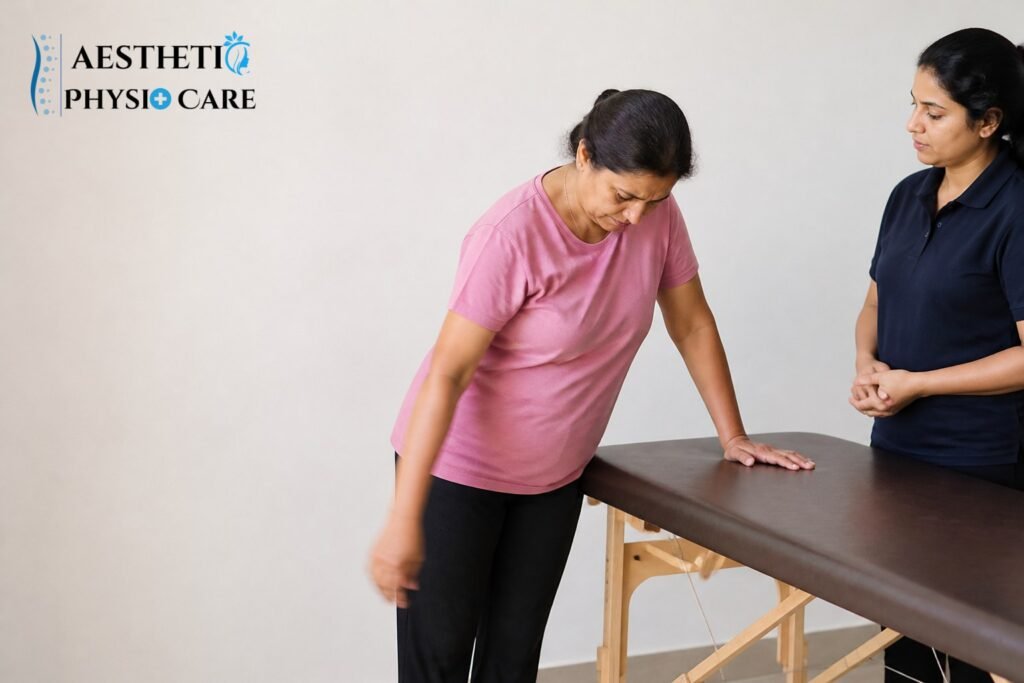
In the painful stage, gentle exercises such as pendulum swings help keep the joint moving without forcing it.
Progressive stretching
As pain settles, stretches are gradually increased to regain movement in all directions, including reaching up, out to the side and behind your back.
Manual therapy
Hands-on joint mobilisation and soft-tissue techniques can help ease stiffness and muscle tension around the shoulder and upper back.
Strengthening and function
In the recovery stage, we strengthen the shoulder and shoulder blade muscles so you can return to work, prayer, sport and household tasks with confidence.
Your doctor may also discuss other treatments, such as injections. Physiotherapy often works alongside these options.
What exercises can you do at home?
Only do exercises that have been shown to you, and stay within a tolerable level of discomfort. Never force a painful stretch.
- Pendulum swings: lean forward with support and let the arm hang and gently swing in small circles
- Table slides: sitting at a table, slide your hand forward on a towel and back
- Wall walks: walk your fingers up a wall as far as is comfortable
- Towel stretch: use a towel behind your back to gently help the stiff arm move
How can you make daily tasks easier with a frozen shoulder?
- Put the stiff arm into sleeves first when dressing, and take it out last
- Store everyday items at waist or chest height to avoid reaching overhead
- Use your other arm for heavy shopping bags and carrying children
- Choose front-opening clothes during the stiffest phase
- Take short movement breaks if you work at a desk, as stiffness builds with stillness
Small adjustments like these reduce pain flare-ups while you continue your exercise programme.
When to see a doctor urgently
Shoulder pain is not always from the shoulder. Seek urgent medical help for shoulder or arm pain with chest pain, breathlessness, sweating or nausea, as these may be signs of a heart problem. See a doctor promptly if you have a hot, red, swollen joint with fever, pain after a fall with inability to lift the arm, or numbness and weakness in the arm or hand.
Can I get physiotherapy advice online?
Yes. If you cannot visit DHA, an online physiotherapy consultation can guide your exercise programme and help track progress. Online sessions are advisory and do not replace an in-person examination. If your frozen shoulder followed surgery or a fracture, our post-surgery orthopaedic rehab service may also be relevant.
Book a consultation
If a stiff, painful shoulder is affecting your sleep or daily tasks, book an assessment at Aesthetic Physio Care in DHA, Lahore, open Monday to Saturday, 9am to 10pm. Learn more on our joint pain and arthritis physiotherapy page, then message us on WhatsApp +92 339 0001855, call +92 323 4551855 or email hadia@aestheticphysiocare.com.
Frequently asked questions
Can frozen shoulder go away on its own?
Frozen shoulder often improves over time, but it can take many months or longer, and some stiffness may remain. Physiotherapy helps manage pain, keep the shoulder moving and support a smoother recovery rather than simply waiting for it to pass.
Is frozen shoulder linked to diabetes?
Yes. People with diabetes are more likely to develop frozen shoulder, and it may last longer. If you have diabetes and notice increasing shoulder pain and stiffness, get it assessed early and keep working with your doctor on blood sugar control.
Should I keep moving a frozen shoulder?
Yes, gently. Keeping the shoulder still for long periods can make stiffness worse. Gentle exercises that stay within a tolerable level of discomfort are usually recommended. Avoid forcing painful stretches, especially during the early, painful stage.
How do I sleep with a frozen shoulder?
Many people find it easier to lie on their back or on the unaffected side, with a pillow supporting the painful arm. Avoid lying directly on the affected shoulder. Heat before bed may also help ease discomfort.
Talk to Dr. Hadia about your situation
In-clinic in DHA Lahore or online on Zoom / Google Meet for Pakistan and the USA. Mon–Sat, 9am–10pm (PKT).