

Licensed Physical Therapist · PPTA-P 14336 · Aesthetic Physio Care, DHA Lahore · November 1, 2026
Quick answer: A regular facial is a relaxing, manual treatment that cleanses, exfoliates and moisturises the skin surface. A HydraFacial uses a medical-grade device to cleanse, gently exfoliate, extract and infuse serums in one session, with little or no downtime. HydraFacial suits congested, dull or oily skin; a regular facial suits relaxation and basic upkeep.
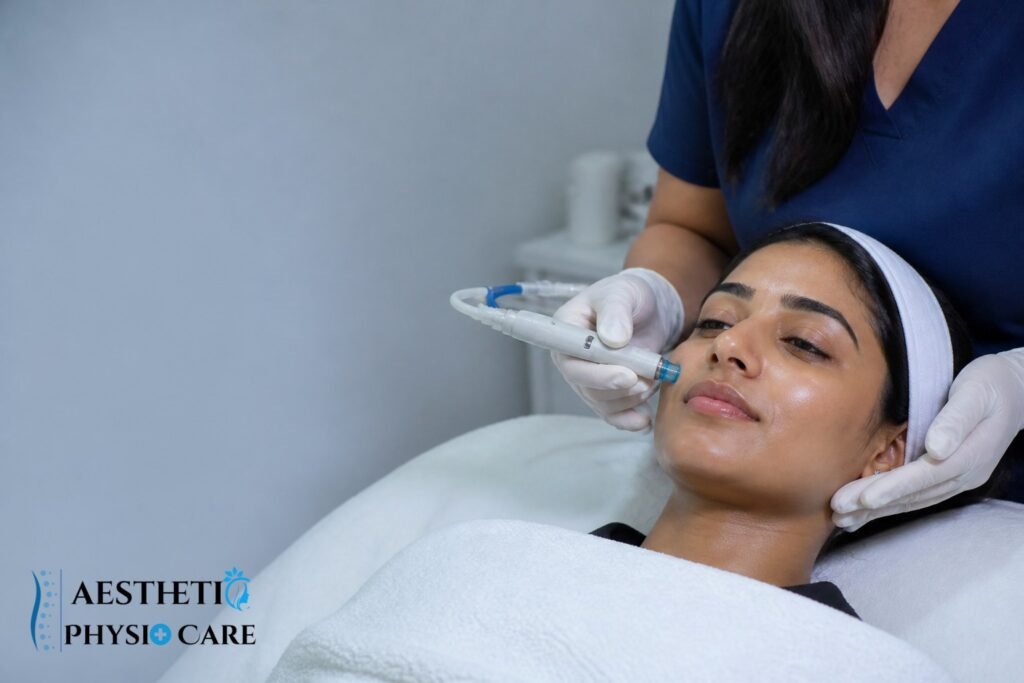
What is a regular facial?
A regular or classic facial is usually done by hand. A therapist cleanses your skin, applies steam, exfoliates with a scrub or mild enzyme, may do manual extractions, then finishes with a massage, mask and moisturiser.
The results depend heavily on the products used and the skill of the person doing it. A good classic facial feels calming and leaves skin looking fresh, but it mainly works on the surface layer of the skin.
What is a HydraFacial?
HydraFacial is a device-based treatment that uses a vortex-style suction tip with a series of serums. Each step is controlled by the machine rather than by hand. A typical session follows this order:
- Cleanse and peel: gentle exfoliation to lift dead skin cells
- Extract: painless suction to clear blackheads and congestion from pores
- Hydrate: infusion of hydrating and antioxidant serums
- Protect: targeted boosters and sun protection, depending on your skin concern
Because extraction is done by suction rather than squeezing, many people find it more comfortable than manual extraction, and the skin is less likely to be left red or marked.
HydraFacial vs regular facial: what are the key differences?
| Feature | Regular facial | HydraFacial |
|---|---|---|
| Method | Manual, by hand | Medical-grade device with serums |
| Extraction | Squeezing with fingers or tools | Gentle suction |
| Exfoliation | Scrub or mild enzyme | Controlled resurfacing and gentle acid step |
| Consistency | Varies with the therapist | Standardised, step-by-step protocol |
| Customisation | Choice of masks and products | Choice of targeted boosters |
| Downtime | Usually none, sometimes mild redness after extractions | Usually none or minimal |
| Best for | Relaxation and basic upkeep | Congestion, dullness, dehydration, oily skin |
Which facial is right for your skin type?
Oily or acne-prone skin
A HydraFacial is often a good choice because suction extraction clears pores without much pressure on inflamed skin. If you have active, painful acne, you may need a medical acne plan first. Our acne and acne scar treatment page explains the options.
Dry or dehydrated skin
Both can help. HydraFacial adds a hydrating serum step, which many people with dry skin enjoy, especially in winter or after air-conditioned workdays.
Sensitive skin
Tell your practitioner about any sensitivity, eczema or rosacea. The acid step can be adjusted or skipped, and a patch test or gentler protocol may be advised. A rough manual scrub may irritate sensitive skin more.
Dull skin and uneven tone
HydraFacial can give a fresher, brighter look for an event. For stubborn dark patches, it is usually combined with a dedicated pigmentation plan, sun protection and sometimes chemical peels.
Is a HydraFacial safe?
For most people, yes, when done by a trained practitioner after a proper skin assessment. It may not be suitable straight away if you have:
- An active rash, sunburn, cold sore or skin infection
- Recently used strong retinoids or had a peel or laser treatment
- Known allergies to any of the serum ingredients
- Pregnancy, when some ingredients may be avoided
The NHS advice on choosing who will do your cosmetic procedure is worth reading before any treatment. Ask about training, hygiene and what happens if you have a reaction.
How often should you get a HydraFacial?
There is no single rule. Some people book one before a wedding or event, while others prefer a regular routine to keep congestion under control. Your practitioner will suggest a schedule based on your skin type, your goals and how your skin responds after the first session. Skin also renews itself over several weeks, so spacing treatments sensibly is better than booking too often.
What should you do after a facial?
- Avoid heavy makeup for the rest of the day if possible
- Use a gentle cleanser and a simple moisturiser
- Apply broad-spectrum sunscreen every morning, especially in Lahore’s strong sun
- Skip retinoids, scrubs and strong acids for a day or two, or as advised
- Avoid saunas, steam rooms and intense workouts for the rest of the day
What should you ask before booking a facial?
- Who will carry out the treatment, and what training do they have?
- Will my skin be assessed first, and will the products be adjusted for my skin type?
- Which ingredients are in the serums or masks, and are any likely to irritate my skin?
- What should I stop using before the appointment, such as retinoids or exfoliating acids?
- What aftercare will I need, and who do I contact if my skin reacts?
Clear answers to these questions are a good sign that the clinic takes skin safety seriously. If you have a skin condition such as eczema, rosacea or melasma, mention it at the start so the plan can be adjusted.
How do you choose between the two?
Choose a regular facial if your skin is generally healthy and you mainly want relaxation and a refresh. Choose a HydraFacial if you want deeper pore cleansing, more hydration and a consistent, clinic-based treatment with no real downtime. If you are unsure, a skin consultation is the simplest way to decide. Visit our HydraFacial and medical facials page to see how we tailor treatments, or explore all of our skin aesthetics services.
Book a consultation
Not sure which facial suits your skin? Book a skin assessment at Aesthetic Physio Care in DHA, Lahore, open Monday to Saturday from 9am to 10pm. Message us on WhatsApp +92 339 0001855, call +92 323 4551855 or email hadia@aestheticphysiocare.com and we will help you choose the right treatment.
Frequently asked questions
Does a HydraFacial hurt?
Most people find a HydraFacial comfortable. The suction feels like a cool, gentle pull on the skin, and the acid step may tingle briefly. If anything feels uncomfortable, the practitioner can adjust the settings or skip a step.
Is HydraFacial better than a regular facial for acne?
For oily, congested skin, HydraFacial is often preferred because suction clears pores with less pressure. Active, inflamed or cystic acne usually needs a medical plan first, so an assessment helps decide what is safe for your skin.
Can I get a HydraFacial before a wedding or event?
Yes, it is a popular pre-event treatment because downtime is usually minimal. If it is your first time, book a few days before the event so you know how your skin responds and have time to settle any mild redness.
Who should avoid a HydraFacial?
Delay treatment if you have sunburn, an active rash, cold sores or a skin infection, or have recently had a peel, laser or strong retinoid use. Tell your practitioner about allergies, pregnancy and any skin conditions before starting.
Talk to Dr. Hadia about your situation
In-clinic in DHA Lahore or online on Zoom / Google Meet for Pakistan and the USA. Mon–Sat, 9am–10pm (PKT).